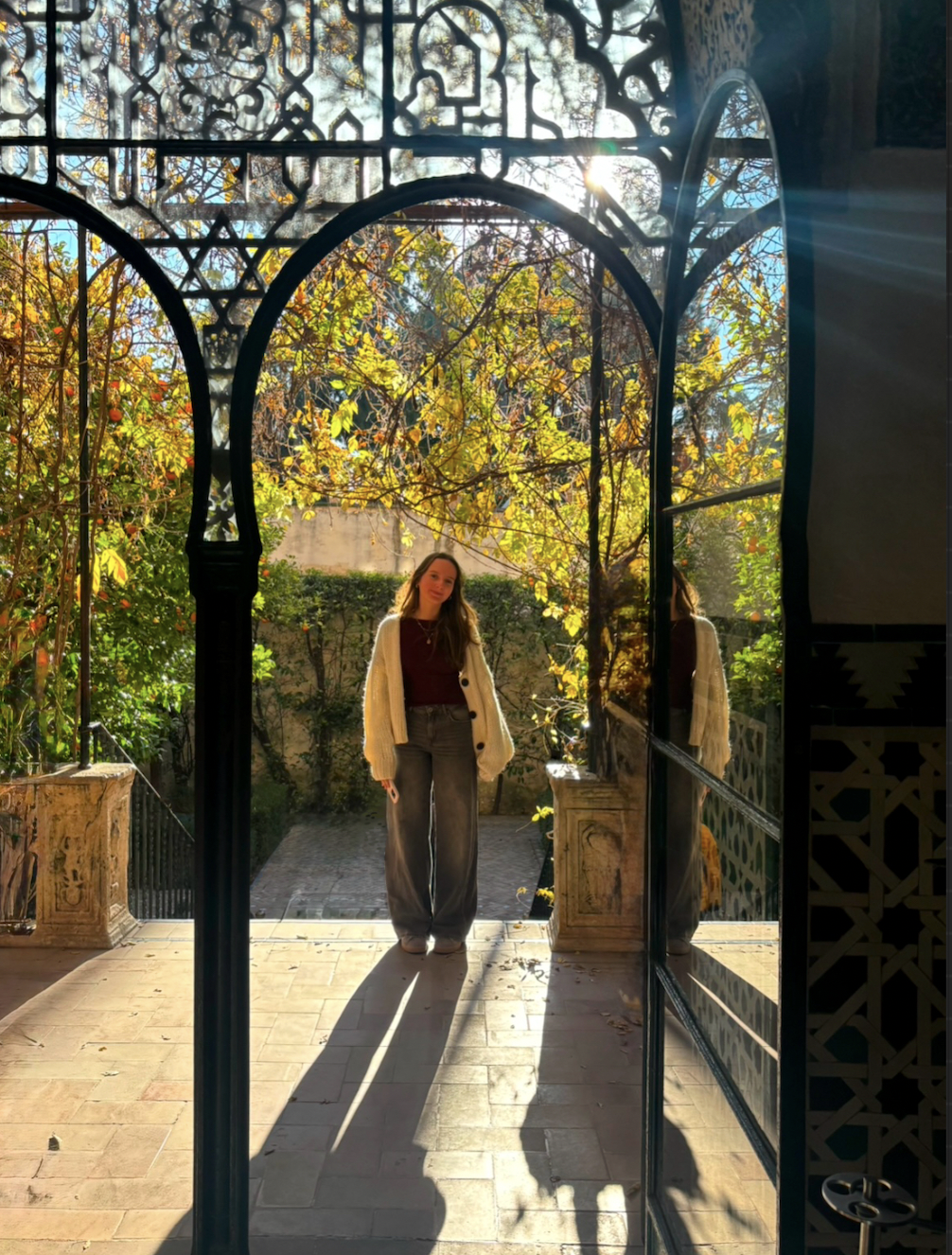
Hola, everyone!! We are in Spain, and before anyone asks, no, this entry is not about Barcelona or Madrid. They will get their moment. Today, I want to talk about Andalucía, because the south of Spain deserves a little attention, and I have a lot to say.
Andalucía has a combination of things that makes it very difficult for me to dislike it: beautiful architecture, interesting history, and food that encourages ordering multiple things at once. Really, there was a good chance I would enjoy it.
However, it is also the type of place where planning a trip becomes slightly dangerous. You start with two cities, discover another one nearby, and suddenly you are trying to fit half of southern Spain into a few days. So, before you do that, let me explain why some of these places deserve more than a quick stop.
Seville, you are very pretty
Seville is the capital of Andalucía, and it takes its job of representing the region quite seriously. There is the cathedral, the Real Alcázar, the Plaza de España, and then a ridiculous number of streets that make the walk between attractions an attraction itself.
The Real Alcázar is especially interesting because of the different architectural styles within the complex. There are courtyards, decorated arches, gardens, and enough details to keep you looking around for a long time. I love places where you can actually notice how different periods influenced what you are seeing. It gives me something to think about beyond “this is pretty,” even though, yes, that is also a very important observation.
Then there is the Plaza de España, with its bridges and tiled benches representing Spanish provinces. It is quite an elaborate way of making a square, but I appreciate the commitment.
My suggestion would be to leave time between the famous places. If your entire day is scheduled down to the minute, walking down a street simply because it looks nice becomes surprisingly stressful.
Granada and my history obsession
The Alhambra is the main attraction here, and this is one of those situations where understanding the history makes the place much more interesting.
It was a palace-city of the Nasrid rulers, with royal residences, defensive structures, and spaces serving the court. So, when visiting, you are looking at what was once an entire center of political and daily life. The courtyards and decoration are beautiful, but knowing what the buildings were used for gives you a reason to pay attention to them.
Also, book ahead. I support being spontaneous about where to have lunch; I am less enthusiastic about being spontaneous with the attraction you traveled to a city to see.
Afterward, there is the Albaicín, with its winding streets and views toward the Alhambra. This is where I would leave some room in the itinerary for walking, stopping, and taking approximately the same picture several times.
Córdoba deserves a stop
Córdoba’s Mosque-Cathedral is particularly interesting because its history is visible within the building. The former mosque was consecrated for Catholic worship in 1236, and later Christian additions changed the space while much of the mosque’s architecture remained.
For me, this is the kind of place that makes history feel less distant. Changes in religion and political power can sound very abstract in a textbook, but here you can look at the architecture and see their consequences.
Of course, Córdoba also has its old streets, courtyards, and places to sit down after deciding you could walk everywhere. I would recommend allowing time for those too.
A very important topic: food
I love the idea of tapas because choosing one thing from a menu can be an unnecessarily difficult experience. Small portions mean you can try several dishes, share them, and spend half the meal discussing which one was best.
My only warning is about the itinerary itself. Andalucía has enough to keep you busy without adding a new city every morning. Give yourself time to sit in a square and eat something. The old buildings will still be there after lunch.